

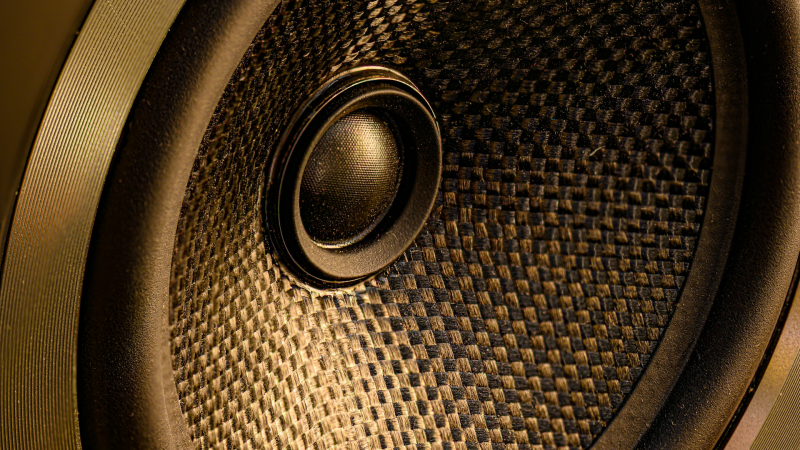
Why Your Expensive Speakers Sound Cheap: The Art of Room Placement
Thursday, February 5, 2026, 12 PM



The Missing Link in Your Audio Chain
You’ve spent months researching drivers, sensitivity ratings, and amplifier wattage. You finally unboxed your dream speakers, plugged them in, and... they sound thin, boomy, or just plain average. Before you box them up for a return, look at your walls.
In high-end audio, your room is the most influential component in the signal chain. If your room acoustics are working against you, even a $10,000 setup will sound like a budget radio.
The Physics of Sound Reflection
Sound doesn't just travel from the speaker to your ears; it bounces off every hard surface in the room. When these reflections hit your ears a few milliseconds after the direct sound, they cause what engineers call "comb filtering." This muddies the clarity and ruins the stereo image.
To fix this, you don't necessarily need a bigger amp; you need better placement. The goal is to maximize the direct sound from the speaker while minimizing the reflected sound from the environment.
The Rule of Thirds
One of the most effective ways to reduce unwanted reflections and bass nodes is the Rule of Thirds. Ideally, your speakers should be placed one-third of the way into the room from the front wall. This prevents bass frequencies from reflecting back and creating "standing waves"—those annoying spots in a room where the bass either disappears or becomes overwhelming and "one-note." If one-third is too intrusive for your living space, try for at least two feet of clearance from any wall.
The Equilateral Triangle
For the best "imaging"—the ability to pinpoint exactly where instruments are located on a virtual stage—you and your two speakers should form a perfect equilateral triangle. If your speakers are six feet apart, your listening chair should be exactly six feet away from each speaker.
Toe them in slightly so the tweeters point directly at your ears. This ensures the high frequencies, which are highly directional, reach you with the most detail and the least amount of side-wall interference.
Managing the "First Reflection" Points
If your room still sounds echoey or harsh, identify the first reflection points. These are the spots on your side walls where the sound hits first before bouncing to your seat.
You can find these by having a friend slide a mirror along the wall while you sit in your listening position. When you see the speaker in the mirror, that’s the spot. Placing a simple acoustic panel, a thick rug, or even a bookshelf filled with books at that location will dramatically sharpen your soundstage and reduce listener fatigue.
Final Thoughts
Audio is as much about physics as it is about electronics. By mastering room placement, you can make a $500 pair of speakers outperform a $5,000 pair sitting in a poorly optimized room. Before you reach for your wallet to buy more gear, start moving your furniture. Your ears will thank you.
Posted in: Electronics






No comments yet