











Why Your Face Peels After Welding: The Science of the Arc Burn



Updated Saturday, February 28, 2026, 4 PM
The Invisible Sun in Your Shop
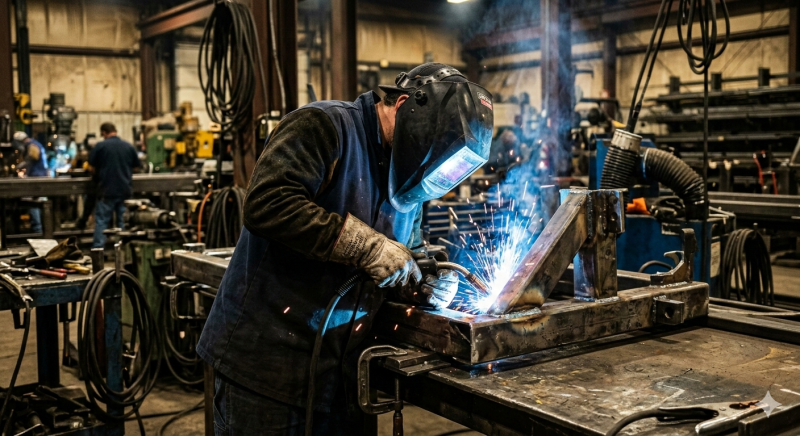
You finish a long day of TIG or MIG welding. You feel fine. Maybe your face feels a little tight, like you spent a few hours at the beach, but nothing seems wrong. Then, forty-eight hours later, you look in the mirror and see it: your forehead and cheeks are shedding like a snake. It looks like a bad sunburn, but you were indoors all day.
Most beginners think the heat from the molten puddle is what causes the skin to peel. While that heat is intense, it is rarely the culprit for peeling. The real reason your skin is falling off is because you just gave yourself a high-intensity radiation burn. A welding arc is essentially a tiny, concentrated sun held just a few feet from your nose.
It Is Not Heat, It Is Radiation
When you strike an arc, you aren't just creating light and heat. You are creating a massive amount of Ultraviolet (UV) radiation. Specifically, welding produces UV-B and UV-C rays. In the natural world, the earth's atmosphere filters out most UV-C, so your body isn't used to it. When you weld without a mask—or even with a cheap one that has light leaks—that UV-C slams into your skin cells.
This radiation is so powerful that it actually breaks the DNA inside your skin cells. Your body realizes these cells are damaged beyond repair and triggers a process called apoptosis. This is programmed cell death. Your body literally kills off the top layer of skin to prevent those damaged cells from turning into something worse, like cancer. The peeling you see is billions of dead cells being pushed off as new skin grows underneath.
The "Flash Burn" Delay
One of the strangest parts of welding-related skin peeling is the delay. You won't feel the burn while you are working. Unlike a splash of hot coffee that hurts instantly, UV damage takes time to manifest. You might feel a "gritty" sensation in your eyes (arc eye) first, followed by a red, itchy face a few hours later. By the time the peeling starts, the damage was actually done days ago.
This is why some old-timers get sloppy. They think, "I'm only doing one quick tack weld, I don't need my hood." But that one-second flash is enough to deliver a dose of UV that would take hours to get from the actual sun.
Why Your PPE Might Be Failing You
If you are wearing a helmet and still peeling, you might have a reflection problem. If you are welding in a small space with white or shiny walls, the UV light can bounce off the wall behind you, hit the inside of your helmet, and reflect onto your face. This is a common way welders get burned even while wearing a hood.
Another culprit is the "V-neck" gap. If your jacket isn't buttoned all the way up, the arc light bounces off your chest and up under the chin of the helmet. This creates a specific peeling pattern right under the jawline.
How to Fix the Peal
If you are already peeling, stop picking at it. You are exposing raw, sensitive skin that isn't ready for the air yet. Use a fragrance-free moisturizer or pure aloe vera. Avoid anything with alcohol or heavy scents, as these will sting like crazy on a fresh arc burn.
To prevent it next time, check your gear. Ensure your helmet has a tight fit and consider wearing a flame-resistant balaclava or "sock" under your hood. This blocks those sneaky reflections that come from behind. Remember, every time your skin peels from welding, you are significantly increasing your risk of long-term skin damage. Treat the arc with the same respect you would give a nuclear reactor.



No comments yet