

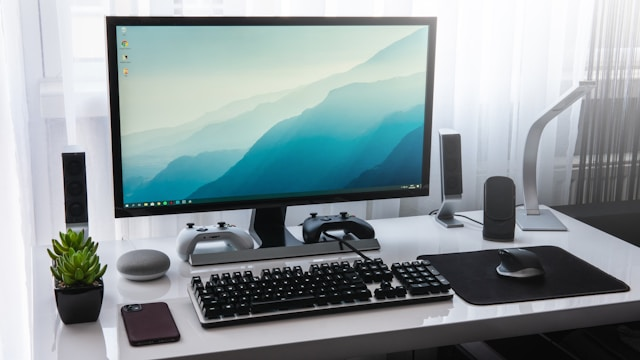
Why Your Power Supply is Your PC’s Most Critical Component
Wednesday, February 11, 2026, 10 PM



The Heart of the Machine
When building or upgrading a computer, most people spend hours comparing GPU benchmarks or CPU clock speeds. They obsess over frame rates and thermal paste. Yet, the most important component is often the one bought with whatever money is left over: the Power Supply Unit (PSU). Treating your PSU as an afterthought is the fastest way to shorten the lifespan of your expensive hardware.
Why Quality Matters Over Wattage
A common mistake is chasing the highest wattage for the lowest price. A generic 850W power supply that costs $40 is significantly more dangerous than a high-quality 600W unit from a reputable brand. Why? It comes down to voltage stability and ripple suppression.
Cheap power supplies often struggle to maintain a steady flow of electricity. They produce "dirty" power with micro-fluctuations in voltage. While your PC might seem to run fine, these fluctuations put immense stress on the delicate capacitors on your motherboard and graphics card. Over time, this leads to mysterious system crashes, data corruption, and eventually, total hardware failure.
Decoding Efficiency Ratings
You have likely seen the "80 Plus" stickers in Bronze, Silver, Gold, and Platinum. These aren't just marketing gimmicks; they are certifications of efficiency. An efficient PSU converts more AC power from your wall into DC power for your components, wasting less as heat.
- Longevity: Less heat means the internal components of the PSU last longer.
- Stability: Higher-rated units generally use superior internal Japanese capacitors that handle heat better.
- Savings: While the upfront cost is higher, a Gold or Platinum unit will lower your monthly electricity bill if you use your PC daily.
The Right Way to Size Your PSU
Don't fall for the "bigger is always better" trap. Power supplies are most efficient when they are running at roughly 50% to 80% of their maximum capacity. If you build a system that only draws 300W but you install a 1200W power supply, you are actually operating in a less efficient range.
Use an online wattage calculator to estimate your peak draw, then add a 20% buffer. This gives you room for minor upgrades and ensures your PSU stays in its "sweet spot" for efficiency and noise levels without being overkill.
The Warranty Tell
If you aren't sure if a PSU is high quality, look at the manufacturer's warranty. Reputable brands offering 7 to 10-year warranties are confident in their internal components. If a unit only offers a 1 or 2-year warranty, it is a sign that the manufacturer doesn't expect it to survive much longer than that. Invest in the foundation of your build, and the rest of your hardware will thank you.
Posted in: Gadgets







No comments yet